New Zealand is made for campervans. Snow-capped peaks, empty surf beaches, and the freedom to wake up somewhere new each morning. But the gap between a dream trip and an expensive, stressful one often comes down to a handful of avoidable mistakes. These are the five that catch out most first-timers — and how to sidestep them.
1. Treating freedom camping as a free-for-all
Freedom camping is a privilege in New Zealand, not a right. It allows you to stay overnight on public land — but only where signage permits it, and usually only in a certified self-contained vehicle. Turn up in a standard campervan without that certification and you risk an infringement fine, a knock on the window at midnight, or both.
Self-contained means your vehicle has an onboard toilet, a waste water tank, and fresh water storage. The certification is usually a small blue sticker on the windscreen. If you're hiring, ask the company directly. If you're buying, check the paperwork. Older vans can lose their certification, so never assume.
Before you freedom camp, check three things:
- Is freedom camping allowed at this specific spot? Look for the signs — rules change from region to region.
- Is your vehicle certified self-contained? The sticker must be current.
- Are you leaving no trace? That means taking all rubbish, using the toilet, and not parking on soft ground.
Many councils have tightened rules in recent years. Tempting as it is to pull over beside a beautiful lake, a quick look at the local council website or the DOC (Department of Conservation) app will save you a hefty fine. If you're unsure, pay for a campsite. A powered site costs far less than an infringement notice.
2. Packing for the postcard, not the forecast
New Zealand's weather is famously fickle. You can leave a sunny campsite in the morning, drive over a pass, and find yourself in horizontal rain by lunch. First-timers often pack for the brochure version of the country — shorts, t-shirts, flip-flops — and spend the rest of the trip buying fleeces and waterproofs at inflated prices.
Think in layers. A merino base, an insulating mid-layer, and a waterproof outer shell will handle most days. Add a warm hat and gloves for the South Island, even in summer. The sun is fierce when it appears, so bring high-factor sunscreen and sunglasses.
Campervan weather kit
- Waterproof jacket and trousers that pack small.
- Quick-dry towels. Damp towels in a small van are miserable.
- A head torch for late arrivals and early starts.
- Extra pegs and a washing line — campsite dryers are often busy.
- A small mat for outside the sliding door. It keeps mud and sand out.
Check the MetService website each evening. If a front is coming, plan a shorter drive or book a powered site with a communal kitchen. There's no shame in retreating indoors with a book and a cup of tea.
3. Assuming fuel is cheap, easy and everywhere
Fuel in New Zealand is not the bargain you might hope for. Prices rise sharply in remote areas, and some stations close early or have no pay-at-pump option. On the West Coast, in Fiordland, and across the central North Island, the gap between stations can be longer than you expect.
Fill up when you can, not when you have to. A good rule is to top up whenever you pass a station and your tank is below half. In remote towns, ask locally about the next fuel stop. Some places only have one pump, and it might be out of order.
Fuel-saving habits that actually help
- Drive smoothly. Campervans are heavy and thirsty; hard acceleration burns fuel fast.
- Check tyre pressures weekly. Soft tyres increase consumption.
- Use the air conditioning sparingly. Open a window at low speeds instead.
- Remove roof racks or boxes when not needed. They create drag.
- Download a fuel price app, but don't trust it in the most remote spots.
Also budget for the Cook Strait ferry if you're crossing between islands. It's a significant cost, and you need to book it in advance. Factor it into your daily budget so it doesn't come as a shock.
4. Leaving bookings to chance
New Zealand's popular campsites and activities fill up fast, especially between December and March. Turning up at a holiday park on a Friday evening in February without a reservation is a recipe for a long drive to the next town. The same goes for the ferry, the Milford Sound cruise, and the Tongariro Alpine Crossing shuttle.
Book the big things first: ferry, first and last nights' accommodation, and any must-do activities. The middle of your trip can stay flexible. That way you have a safety net without losing the spontaneity that makes campervan travel so appealing.
Booking priorities for a first trip
- Cook Strait ferry (if crossing islands).
- First night's campsite near the airport or pick-up point.
- Any Great Walk huts or popular DOC campsites with limited pitches.
- Milford Sound cruise or other high-demand tours.
- Last night's campsite before you return the van.
DOC campsites range from basic to serviced. Some can be booked online, others are first-come, first-served. Check the DOC website for each site before you rely on it. And if you're travelling in a popular area, book the serviced campsites too. They're not just for caravans.
5. Trying to see both islands in a week
New Zealand looks small on a map. It isn't. The roads are often narrow, winding, and slow. A 200-kilometre drive can take four hours or more, especially if you stop for photos, roadworks, or a flock of sheep. First-timers routinely plan itineraries that would require a helicopter to complete.
Be realistic. On a two-week trip, you might comfortably cover one island. On a month, you can do both without rushing. Distances that look trivial on Google Maps often involve mountain passes, one-lane bridges, and unsealed sections.
Use the driving time estimate on Google Maps and add 30 per cent. Then add more if you're on the West Coast or in the Catlins. Plan for a maximum of three to four hours of driving per day. That leaves time for walks, swims, and the unexpected. The best moments on a campervan trip are rarely the ones you scheduled.
A realistic daily rhythm
- Drive in the morning while roads are quiet.
- Stop for lunch and a short walk.
- Arrive at your campsite by mid-afternoon.
- Use the evening for cooking, planning, and watching the sunset.
Also check for road closures before you set off. New Zealand's weather can close passes with snow or slips, even in summer. The NZTA (New Zealand Transport Agency) website has live updates. A quick check can save you a wasted day.
A few small habits, a much better trip
None of these mistakes are fatal. But avoiding them turns a good campervan trip into a great one. Check the freedom camping rules before you park. Pack for rain and sun. Fill up early. Book the big stuff. Drive less than you think you should.
If you're hiring, ask the rental company for their advice on self-containment and local rules. If you're buying, get the certification checked. And if you're ever unsure about a legal or council rule, ask at an i-SITE visitor centre or check the council website directly. They're there to help.
New Zealand rewards slow travel. Give yourself room to breathe, and the country will do the rest.
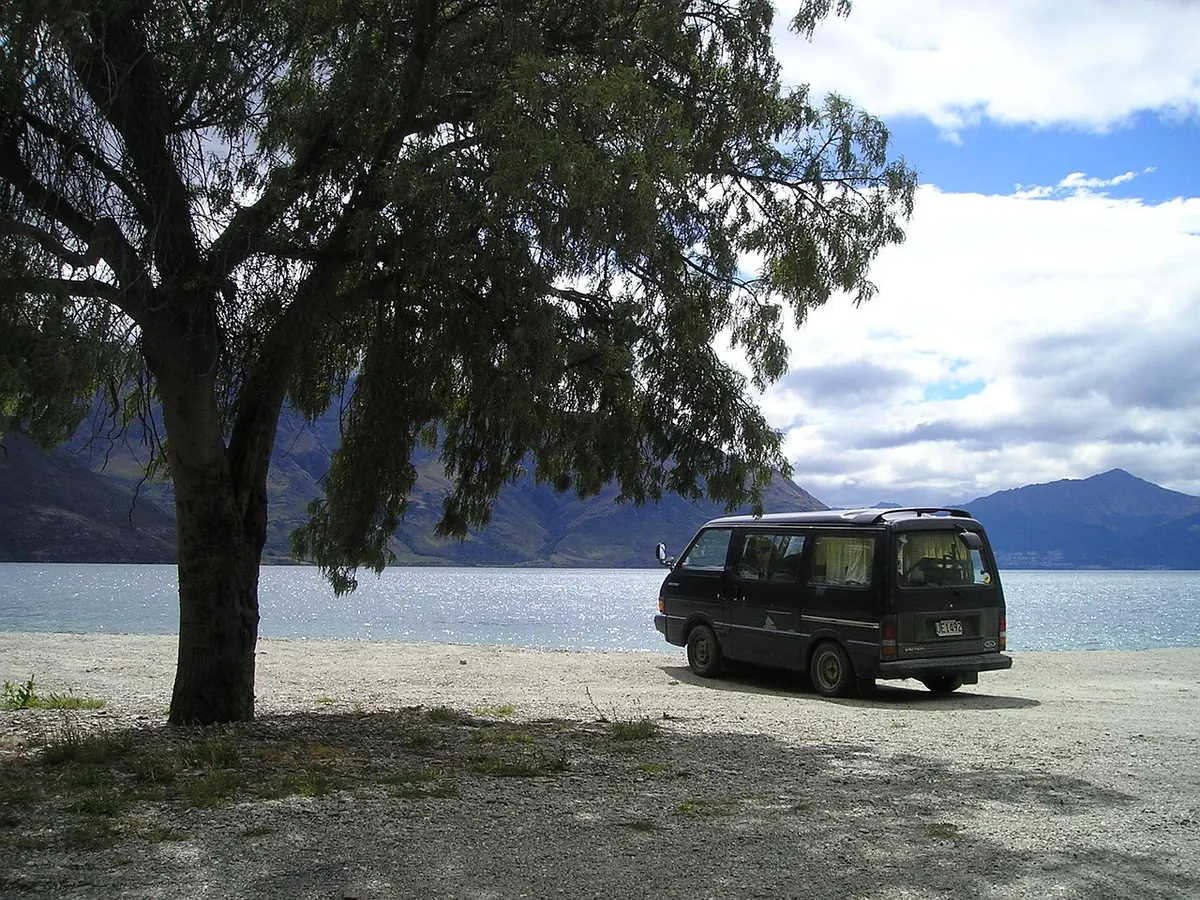
Photo: Simon / Pixabay