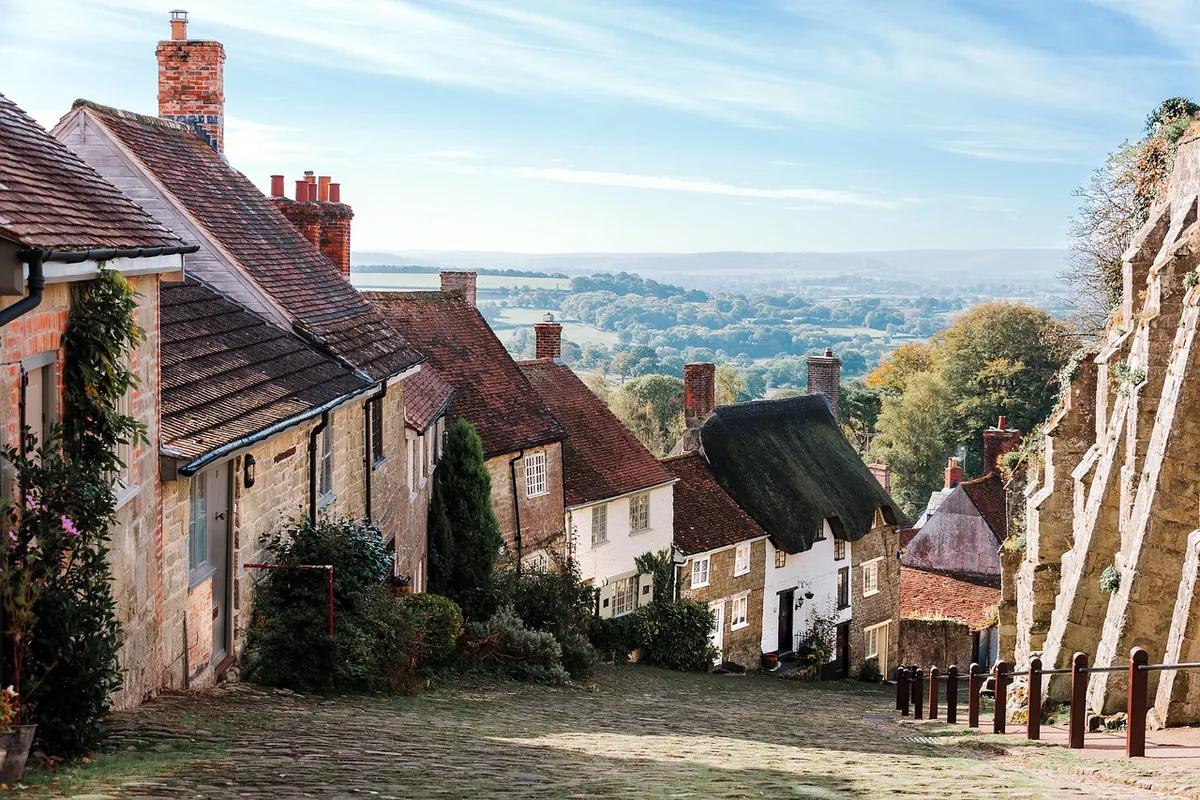
Ask anyone to picture the Cotswolds and they will describe honey-coloured cottages, a low bridge, a tea room with a queue outside. That version exists – usually between eleven and three on a Saturday in August, in about half a dozen villages. The rest of the year, and most of the region, is considerably quieter than its reputation suggests. What follows is a seasonal guide to finding the stone villages, gardens and footpaths at their best and least busy.
January and February: frost, snowdrops and empty footpaths
Winter is the Cotswolds with the volume turned down. Beech hangers are bare and full of light, and a two-hour walk on the Cotswold Way above Broadway or Winchcombe can pass without another soul. Village pubs have fires lit and space at the bar.
Late January into February is snowdrop season. Colesbourne Park near Cirencester and the Painswick Rococo Garden both hold snowdrop openings; dates shift each year, so check before travelling. Many National Trust gardens shut or run reduced hours between November and February, and some car parks close, so plan around what is genuinely open rather than assuming.
Expect mud. Paths that are pleasant in June can be ankle-deep, and stiles get slippery. Waterproof boots and a spare pair of socks in the car are not overkill.
March and April: gardens wake up before the crowds do
March is unpredictable and often lovely: lambs in the fields, catkins, the first proper colour in gardens. By April the woods along the Windrush and the Coln smell of wild garlic, and bluebells begin in the beech woods towards the end of the month.
The one thing to avoid is Easter. School holidays bring the year's first real rush to Bourton-on-the-Water, Bibury and Castle Combe. Travel in the two or three weeks before the Easter break, or midweek afterwards, and you will have a very different experience.
Hidcote, Kiftsgate and Batsford Arboretum all come into their own now. Weekday mornings are quietest; the coach trade tends to arrive late morning.
May and June: the best walking, the busiest afternoons
This is the Cotswolds at its most generous. Long evenings, hawthorn in the hedges, cow parsley along every lane, and enough daylight to walk ten miles and still have time for a pint.
The crowds follow a predictable rhythm. Villages fill from about 10.30am and empty again by five. Arrive before nine, or come back after four, and you get the place to yourself – the light is better then, too.
Events pick up as well: the Chipping Campden Music Festival in May, Cheltenham's festivals through late spring and summer, and the lavender at Snowshill from mid-June. Book accommodation early for any of these.
July and August: where to go when everywhere is full
High summer is the hardest time to do this quietly, so visit the famous villages early or not at all, and spend your days in the ones coaches cannot reach.
- Guiting Power, Stanway and Stanton — a trio of quiet villages under the escarpment, linked by footpaths and a very good pub or two.
- Northleach and Chedworth — a wool church worth the trip on its own, plus the Roman villa a few miles away.
- Belas Knap and Cleeve Hill — a long barrow and the highest point in the Cotswolds, with wide views and almost nobody about.
- Coln Rogers, Ablington and Ampney Crucis — small, lovely and almost entirely free of tour buses.
- Cutsdean and the upper Windrush valley — remote, high and wonderfully empty.
Walk early. By midday in August the lanes are hot and shade is scarce, so plan a morning route and be back at the pub by one.
September and October: the sweet spot
Once schools return in early September the region exhales. The light turns softer, hedges are heavy with sloes and hips, and from mid-October the beech woods above Painswick, Cirencester and Westonbirt turn copper and gold.
This is the best stretch for a walking break: cool enough for a full day out, warm enough to sit outside at the end of it. Westonbirt's acers are at their peak, and the Cheltenham Literature Festival brings a bit of city energy in October.
Book tables for dinner. Autumn weekends in Chipping Campden, Burford and Stow-on-the-Wold are busy with people who have had the same idea.
November and December: short days, low sun, Christmas lights
The days are short but the light is beautiful – low sun across wet stone, mist sitting in the valleys. Plan walks of five to eight miles with a pub at the midpoint rather than ambitious all-day routes; sunset comes early and the lanes are dark.
Christmas brings markets and late-night shopping in Cirencester, Cheltenham and the market towns, and Westonbirt's illuminated trail through the arboretum. Weekends in December are the busiest; a Tuesday or Wednesday feels like a different county.
Practical planning: how to keep it quiet
A few habits make more difference than any secret location.
- Base yourself in a working town, not a honeypot. Winchcombe, Northleach, Nailsworth and Moreton-in-Marsh have pubs, shops and footpaths from the door.
- Travel Tuesday to Thursday, outside school holidays. This single change removes most of the crowd.
- Park once, then walk out. Fifteen minutes on foot from any village car park and the coach parties have vanished.
- Use the buses and the railway. The line to Moreton-in-Marsh makes car-free days realistic.
- Check opening times in winter. Gardens, car parks and some pubs run seasonal hours.
- Take boots and a paper map. Signal is patchy in the valleys and the footpaths are often muddy.
The Cotswolds does not do empty. What it does, generously, is quiet: a frosty lane in January, a bluebell wood before breakfast, a September evening in a village where the only sound is a dog barking somewhere up the hill. Choose your month and your hour, and you will find it.
Photo: Bittermuir / Pixabay